

By Daniel Theyagu [3 April 2025, Singapore]
What if the real problem… isn’t the problem? What if the decisions we make today are perfectly logical—within a system that’s fundamentally flawed?
And here’s the kicker: what if you, as a leader, are unknowingly perpetuating the very blind spots that threaten your organization’s survival?
These are not just provocative questions—they are existential alarms. And to understand why Systems Thinking isn’t just useful but vital, let’s travel back exactly 100 years, to a pivotal year in human history: 1925.
⚙️ 1925: The Year of Invisible Connections
In 1925, two seemingly unrelated events unfolded:
The Scopes “Monkey” Trial in Tennessee tested the legality of teaching evolution in schools, igniting a nationwide clash between science and tradition.
In the same year, Werner Heisenberg laid the foundation for quantum mechanics—ushering in an era that would redefine how we understand cause and effect.
What do these events have in common?
They exposed the dangers of linear thinking in a nonlinear world.
While society debated symptoms, the system beneath—the educational, religious, and scientific paradigms—remained unexamined. The same holds true today. Whether it’s climate change, AI disruption, burnout in the workplace, or organizational inertia, we are confronting complex challenges with outdated mental models.
That’s where Systems Thinking steps in. Not as a theory, but as a survival skill.
🕸️ What Is Systems Thinking, Really?
It’s not about thinking harder. It’s about thinking wider.
Systems Thinking trains you to see the interconnectedness of parts within a whole, the patterns behind the events, and the structure beneath behaviors. It helps us go from firefighting symptoms to redesigning the architecture that gives rise to them.
And here’s the twist: most leaders don’t even realize the system is shaping them. This is where Barry Oshry’s work hits like a thunderbolt.
🧩 Barry Oshry and the Organizational Theatre
Oshry doesn’t just talk about systems—he puts you in them. His experiential approach reveals how people behave differently depending on their place in the system: Top, Middle, Bottom, or Customer.
Each role sees a different “reality.” Each blames the others. No one sees the system as a whole.
Sound familiar?
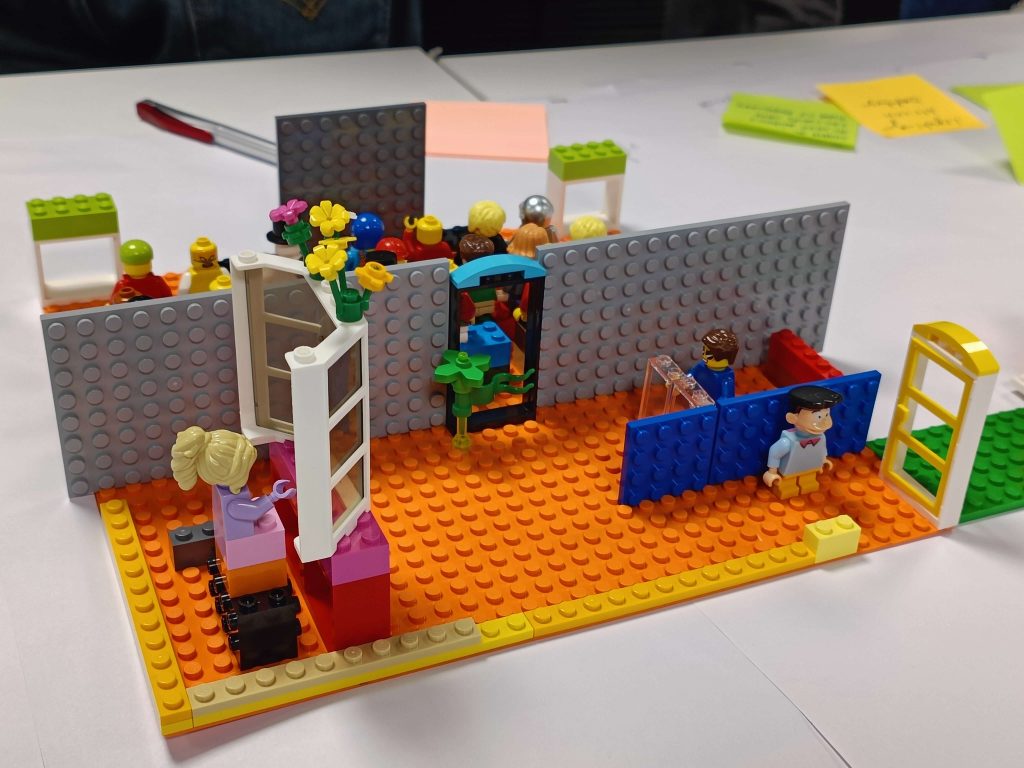
His genius lies in showing that the real enemy isn’t bad leadership or poor communication—it’s the unseen structure trapping everyone in predictable patterns. In our workshops, we bring Oshry’s insights to life using Lego Serious Play—transforming abstract systems into visible, touchable, and malleable models.
You’ll not only see the system. You’ll feel it. You’ll reshape it.
https://academy.smu.edu.sg/courses/systems-thinking-workshop-overcoming-organisational-blindness-and-improve-organisational
🌍 The Cynefin Framework: Navigating the Fog of Complexity
Developed by Dave Snowden, the Cynefin Framework gives us another crucial lens. It categorizes problems into five domains: Obvious, Complicated, Complex, Chaotic, and Disorder.
Most leaders default to “Obvious” and “Complicated” solutions—predictable inputs for predictable outputs.
But real-world challenges today fall into the Complex and Chaotic. Linear solutions? They backfire. Best practices? They collapse.
Systems Thinking helps you operate confidently in the Complex, where cause and effect are only visible in hindsight, and safe-to-fail experiments are more powerful than rigid plans.
🎯 Why Now? Because the World is Off-Balance
If the last five years have taught us anything, it’s this: we’re living in a world that constantly shape-shifts—technologically, geopolitically, socially.
We need more than management tools. We need more than agility. We need the vision to see what lies beyond our current lens.
That vision comes from Systems Thinking.
It’s the missing link that connects people, strategy, innovation, and resilience. It helps you move from reaction to reflection, from fragmentation to wholeness, and from blindness to clarity.
🚀 Join the Shift: Build What the World Needs Now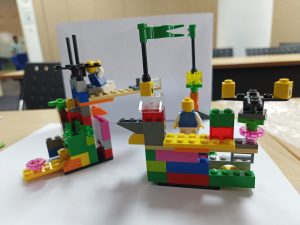
In our Systems Thinking Workshop: Overcoming Organisational Blindness and Improving Organisational Performance at SMU Academy, we don’t just teach concepts.
We build awareness using models. We spark breakthroughs using Barry Oshry’s immersive frameworks. We unlock collective intelligence using Lego Serious Play.
You’ll leave with practical systems maps, strategies to redesign team dynamics, and above all—a new way of seeing.
Because in the end, what you don’t see is exactly what will shape your success or failure.
🔥 Are You Ready to See What Others Miss?
This workshop is not for the faint-hearted. It’s for leaders, innovators, changemakers, and systems thinkers who know that what got us here won’t get us there.
You don’t need another technique. You need a new lens. Join us—and bring your team—because the future belongs to those who can see the system, name the system, and change the system.
🔗 Secure your seat now.
https://academy.smu.edu.sg/courses/systems-thinking-workshop-overcoming-organisational-blindness-and-improve-organisational
Systems Thinking Workshop – Overcoming Organisational Blindness and Improve Organisational Performance [incorporating LEGO® SERIOUSPLAY®] | SMU Academy
#SystemsThinking #BarryOshry #Cynefin #Leadership #OrganizationalDesign #LegoSeriousPlay #SMUAcademy #FutureOfWork #Complexity #AdaptiveLeadership
Article by Daniel Theyagu [3 April 2025, Singapore]